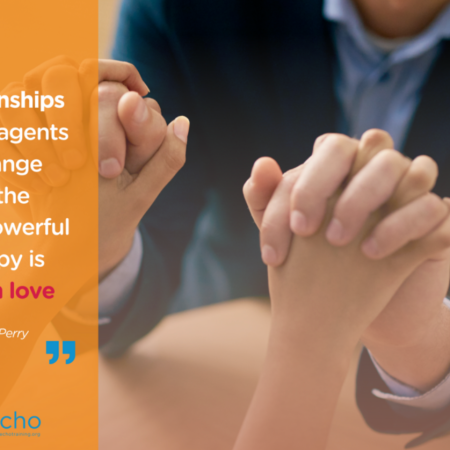
Empathy…or “if we could see inside other people’s hearts” — a touching video

This touching video was put together by the Cleveland Clinic and posted as “Empathy: The Human Connection to Patient Care” on Feb. 27, 2013 on the clinic’s YouTube channel. (Everyone Matters wrapped their logo around it, gave it a catchier title — “If we could see inside other people’s hearts” and published on their YouTube channel on March 20.)

You could take this approach beyond the hospital setting to Anywhere, USA/Canada/Australia/Mexico/Kenya, etc. And you could place it in any school, mental health clinic, prison, court, social services waiting room, or workplace. It goes to the heart of the trauma-informed/resilience/compassion approach of asking: “What happened to you?”, not “What’s wrong with you?”

A woman once told me a story of how her world shifted after she learned about the CDC’s ACE Study, epidemiological research that revealed the link between childhood trauma and the adult onset of chronic disease, depression, violence and being a victim of violence. She said she never looked at homeless people the same again. Instead of regarding them as “lazy” and wondering why they just didn’t pull themselves together and get a job, she realized that they were survivors — just barely — of the worst things that people do to each other and systems do to people.

A community play called ZERO tips Sacramento, CA, into tackling school suspensions

ProductionStills2

(l to r) Crandal Rankins, Alise Guilford, Sophia Hicks, Roman Allen, Steven Daugherty, Spenser Bradley, Bahni Turpin

_____________________

TRACY (student) – I was suspended for “willful defiance”.
MARTHA (James’ mother)- “Willful Defiance.” Isn’t that what you had last time?
JAMES — Uh huh.
MARTHA — What’s that mean?
JAMES — Everything.
TRACY — Anything.
    —  (ZERO, Act One, by Julie Marie Myatt)

Last August, Darryl White, president of the Black Parallel School Board walked onto the stage of Sacramento’s Guild Theater after Act One of ZERO, a play that’s part of the program, Talk It Out: A Community Conversation to Fix School Discipline.

Turning to the standing-room-only crowd, he asked: “How many people know someone who’s been suspended from school?”

Continue reading

Trauma past and present, and how to move on from trauma in the future

brain

Here are three articles that might be of interest, from separate parts of the country, but interconnected in the growing awareness of how to understand, treat and prevent trauma. The first story looks at how those who were traumatized passed their trauma on to their children. The second story looks at how children who have experienced adversity aren’t really incurable — people just haven’t figured out how to help them. And the third offers some ways to build resilience.

Continue reading

Focusing on “terrorism” alone in Boston bombings can hinder opportunity to understand, prevent violence

bostonLately I have been working on a paper about the phenomenology of violence, focusing on the present atrocities in the Democratic Republic of Congo and the 1994 genocide in Rwanda. On the days when I am not trying to grapple with the inconceivable brutality haunting this region of the world, I often sit with people coming to grips with their own personal histories of violence here in the United States.

In this context, when first seeing the headlines announcing the bombings in Boston, I quickly closed my browser — an impulsive defense against the horrific imagery I knew would be forthcoming. I worried where I could put in my heart this senseless tragedy when already feeling overwhelmed by thoughts and images of violence.

Continue reading

What’s better than meds for kids with ADHD? Changing the behavior of parents.

parentSo says a study published in Pediatrics this week. The researchers reviewed 55 studies — 34 looked at parent behavior training (PBT), 15 at the used of prescription drugs, specifically methylphenidate, and six looked at a combination of parent training and school or day-care interventions.

The study was done, according to MedPageToday.com reporter Charles Bankhead, because the Agency for Healthcare Research and Quality, part of the US Department of Health and Human Services, realized that there wasn’t much known about whether drugs or parent-behavior training were more effective in reducing symptoms in pre-school children at high risk for ADHD.

So, according to the article, Dr. Alice Charach, of the Hospital for Sick Children in Toronto, and her colleagues asked this question: “Among children younger than 6 years with ADHD or disruptive behavior disorder, what are the effectiveness and adverse-event outcomes after treatment?”

Continue reading

The (inextricable) Link: Animal abuse, domestic violence, child abuse, elder abuse

Link-circles2013

“Over the past 30 years, researchers and professionals in a variety of human services and animal welfare disciplines have established significant correlations between animal abuse, child abuse and neglect, domestic violence, elder abuse and other forms of violence. Mistreating animals is no longer seen as an isolated incident that can be ignored: it is often an indicator or predictor crime and a “red flag” warning sign that other family members in the household may not be safe. We call this species-spanning interconnectedness of different forms of violence The Link.”

So states The National Link Coalition, which was created in 2008. “…Over 100 dedicated authorities, advocates and researchers representing a diverse array of animal protection, domestic violence, child maltreatment and elder abuse disciplines came together at a unique Town Meeting and National Summit in Portland, Maine.”  Their “goal was to build greater awareness of how these forms of family and community violence are interconnected…and to build successful programs whereby agencies in these fields can cross-report and cross-train each other for more effective prevention of violence.”

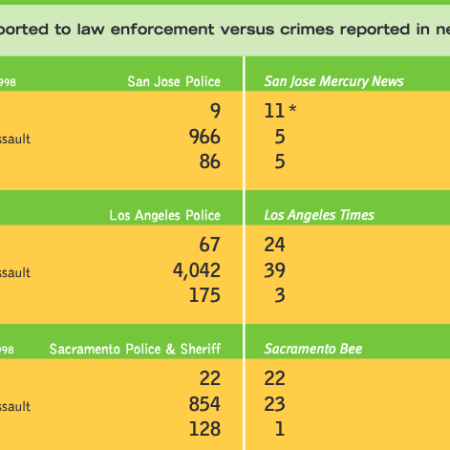
This relatively new field of research has uncovered some grim statistics. PAWS in Washington State outlines some striking

Continue reading

The secret to fixing school discipline problems? Change the behavior of adults

Higa

Godwin Higa, principal, Cherokee Point Elementary School

__________________________________

Two kindergarteners at Cherokee Point Elementary School in San Diego’s City Heights neighborhood get into a fight on the playground. Their teacher sends them to the principal’s office. 

Instead of suspending or expelling the six-year-olds, as happens in many schools, Principal Godwin Higa ushers them to his side of the desk. He sits down so that he can talk with them eye-to-eye and quietly asks: “What happened?” He points to one of the boys. “You go first.” 

Continue reading

If we are to protect and preserve Earth, we have to stop traumatizing each other

alanDo you worry about the nuclear waste and bombs squirreled away in underground bunkers? And wonder what would happen if there weren’t humans constantly monitoring these stockpiles? Such questions once led me to read Alan Weisman’s The World Without Us, which explores what would happen to the planet if humans suddenly disappeared. His book answers the question: How long would it take Earth to recover from us?

I was relieved to learn that, at least with regards to uranium bombs, the speeds required for the fissionable material to collide and explode are not found in nature. Short of pushing a uranium bomb off the side of the Grand Canyon, it isn’t likely these weapons will go off accidentally. Learning this eased my fear of a group of renegades (or poorly trained government employees) mishandling nuclear bombs in transit and accidentally dropping one. Furthermore, if one day we return to a planet of apes, stone banging and jumping on nuclear bombs won’t deploy them either.

However, the bombs’ casings, like the power plants and nuclear waste containers, eventually will corrode. At that point, all surrounding life will be exposed to cancer-causing and mutation-forming alpha particles that will take at least 250,000 years to join background levels of radiation, and hence become nonlethal to life (as we now know it).

With regards to Weisman’s question — how long will it take the planet to recover from our environmental impact — some toxic substances will take hundreds of thousands of years to dissipate, while other contaminants might flush from Earth’s system in a mere year without humans around.

For example, despite being on the planet little more than fifty years, plastic — like nuclear waste — may be one of the longest reminders of late modern civilization. Plastic poses a formidable threat, especially to sea life. When they aren’t hopelessly snared in six-pack rings and nylon cord, many sea animals are mistakenly eating plastic pellets that have the colorful markings of food but could prove deadly once ingested. Furthermore, at present there is no way to naturally breakdown plastic. Even so-called biodegradable forms require environmental conditions few plastics ever experience — intense sunlight and enough heat for them to photodegrade — since most end up swirling in cool ocean currents or on the ocean floor.

Continue reading

New books of note: ‘Restoring Sanctuary’ and ‘Blind to Betrayal’

sanctuaryDr. Sandra Bloom, associate professor at Drexel University’s School of Public Health and founder of the Sanctuary programs, and Brian Farragher, chief operating officer of ANDRUS, have come out with their long-awaited Restoring Sanctuary: A New Operating System for Trauma-Informed Systems of Care. ANDRUS provides services for families and children in New York State’s Westchester County, and also operates the Sanctuary Institute.

Restoring Sanctuary is the third in a trilogy. Creating Sanctuary, written by Bloom, focused on the Sanctuary Model of Care itself, and how it evolved. More than 200 organizations have adopted the Sanctuary model. Destroying Sanctuary, written by Bloom and Farragher, showed how organizational trauma is destroying the U.S. health care system. Restoring Sanctuary provides a roadmap for organizations to transform themselves into safe and trauma-informed environments.

Last week in New York City, about 100 people turned out at a book party for Restoring Sanctuary. In a write-up on PelhamPatch.com, Farragher was quoted as saying that Destroying Sanctuary “described the formidable barriers to providing effective mental health and social services to our clients and issued a call for reform and recovery.  This new volume takes that next step.  We see it as a roadmap to recovery for our nation’s human service organizations.”

Another book, Blind to Betrayal: Why We Fool Ourselves We Aren’t Being Fooled, by University of Oregon psychology

blind professor Dr. Jennifer Freyd and clinical psychologist Pamela Birrell, who teaches at the University of Oregon, will be published on Monday. It provides examples of why organizations, agencies, and society as a whole might want to adopt the Sanctuary model.

Continue reading

Communities making progress with the necessity of dealing with child abuse

Jimmy_Savile_2006In Britain, where officials are dealing with 450 people who have come forward to say that Jimmy Savile abused them when they were children, there’s more awareness, and thus finally more reporting of child abuse. Nevertheless, society still flinches from dealing with it, as The Guardian pointed out in an editorial, “Child abuse: Speaking the unspeakable“. It noted that the world is still doing what Freud had done a hundred years ago: recoiling from the common and damaging child maltreatment that occurs to millions of children daily, and falling into a type of societal dissociation by pretending the problem simply doesn’t exist.

The editorial explained that one of the hurdles that officialdom had to move past in prosecuting child abuse cases was the belief the “child witnesses could not be trusted”. Britain appears to have moved past that, but there’s one more systematic flaw:

Namely, an unwillingness to take seriously the complaints of youngsters who exhibit exactly the sort of symptoms of mental ill health – drinking, self-harm, extreme reticence – that can be caused by this abuse.

Around the U.S., other efforts are underway to make reporting child abuse easier.

In 2011 in Oregon, 75,000 cases of child abuse or neglect were recorded; 710 of those were in Lane County. The county oregonhas set a goal of reducing child abuse and neglect 90 percent by 2030. The 90by30 Project’s first annual conference begins tomorrow. The project was launched by the University of Oregon College of Education. According to this story on KVAL.com:

“It’s more the idea of taking the responsibility for that intervention away from that handful of people in government or non-profits and putting it where it belongs with each of us,” said 90by30 program director Phyllis Barkhurst.

Continue reading

Follow

Get every new post delivered to your Inbox.

Join 1,088 other followers